
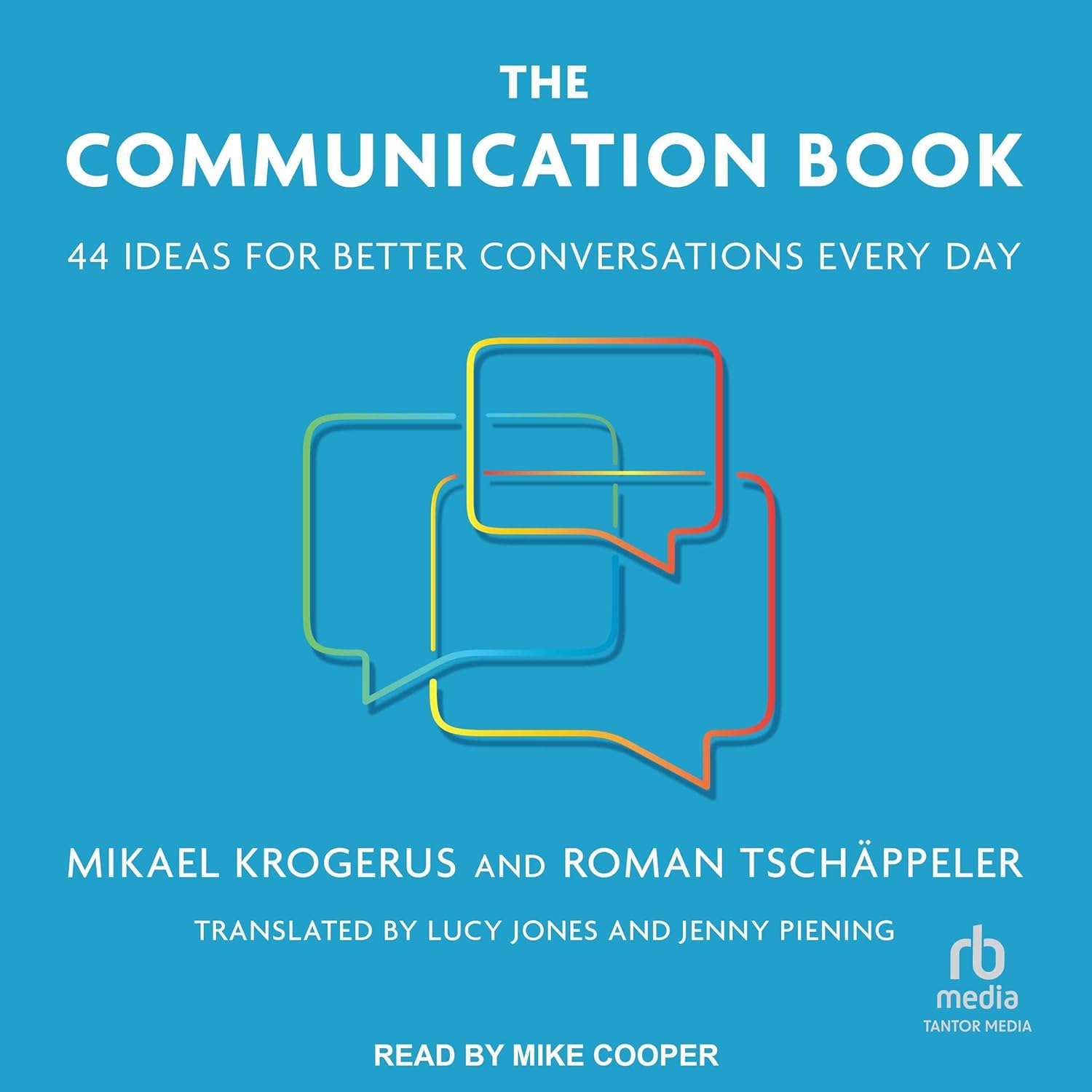
I recently finished reading The Communication Book by Mikael Krogerus and Roman Tschäppeler, and I must say, I found it quite enlightening! As someone who loves exploring effective communication strategies, this book piqued my interest because it promised a distillation of forty-four pivotal communication theories. The idea of having such valuable insights packaged into one concise read was irresistible.
From the start, I appreciated how the authors managed to blend theoretical knowledge with practical advice. For instance, the suggestion to pose open-ended questions during conversations to make others feel brilliant was a refreshing approach that resonated with me. It’s a simple yet effective technique that can enhance the quality of interactions dramatically. Moreover, the emphasis on eliminating smartphones during meetings and encouraging everyone to stand up is a practical tip I plan to apply in my own professional life.
Many readers have expressed similar positive sentiments. For instance, Cofftea_ remarked that the book offered "great insights" and was a pleasure to read, while Cheyenne Hose praised it as a "quick read" filled with plenty of actionable ideas to improve one’s communication skills—I’d have to agree with both of them.






However, I also found a few drawbacks worth mentioning. Some readers pointed out that while the book is an enjoyable refresher, it doesn’t necessarily offer groundbreaking revelations for those who actively engage with communication literature, such as Andrew G. noted. Personally, I found this a bit true; although I did encounter new perspectives, much of the content felt like a summary of concepts I’ve come across before.
Another concern was raised by Kendra, who mentioned that the book gives "a short summary of each topic." This is precisely what makes The Communication Book a good introduction for beginners. Still, it falls a bit short for readers seeking deeper insights. It provides an enjoyable overview, but if you’re looking for an in-depth analysis, this book might leave you wanting more.
The book’s layout is another highlight with its cartoon-like illustrations that simplify complex theories. However, not everyone appreciates this style. Some readers, like A F., mentioned that the abundance of cartoons detracted from the seriousness of the content, making it feel somewhat simplistic. I can see where they’re coming from, but I personally found the illustrations added a creative touch that enhanced my understanding.
Overall, The Communication Book met my expectations in providing a blend of practical communication strategies along with theoretical backing. The sections that focus on various aspects—work, self, and relationships—offer a well-rounded approach, making it usable in different contexts. It even encourages introspection, which I found particularly valuable.
As someone who frequently seeks to improve my conversational skills, I would definitely recommend this book as an engaging, accessible guide to anyone looking to refine their communication abilities. While it might not be a treasure trove of new information for seasoned readers, it’s a solid resource for beginners or those looking for a quick refresher.
In conclusion, The Communication Book is a worthwhile read that fuses theory with practicality, perfect for enhancing day-to-day interactions and professional relations. If you’re curious about improving how you communicate in various settings, this little gem might just be what you need!