
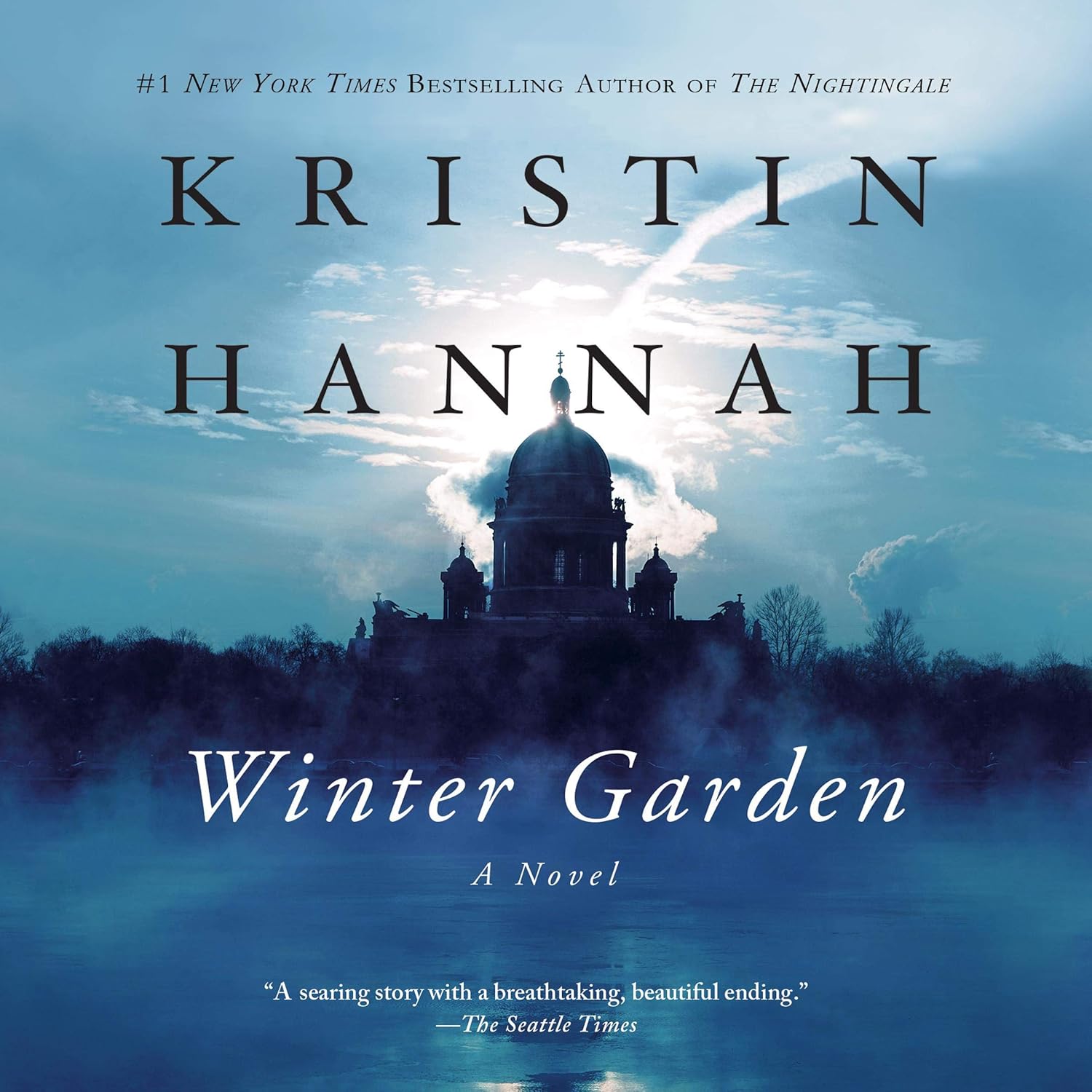
I recently finished reading Winter Garden by Kristin Hannah, and I must say, it was a journey steeped in emotion, family dynamics, and a deep exploration of the past. As a fan of historical fiction, I was drawn to this title because of its setting that spans from war-torn Leningrad to modern-day Alaska, a juxtaposition that promised a captivating story about two sisters and their complex relationship with their mother.
The novel begins with the strained relationship between sisters Meredith and Nina Whitson, who couldn’t be more different. Meredith chooses to remain home and manage the family business, while Nina embarks on a world tour as a photojournalist. Their reunion, however, is not under joyful circumstances; it’s bound to the illness of their father and the enigmatic promise he makes on his deathbed. This promise leads their mother, Anya, to finally share a long-buried family story that intertwines their lives and pasts in ways they never could have expected.
What I loved about Winter Garden was how it delved deeply into the intricate dynamics of familial relationships, particularly the bonds between mothers and daughters. The dual timelines beautifully enriched the narrative, allowing us to witness the mother’s past unfold parallel to the sisters’ present struggles. The emotional depth in Hannah’s writing is simply phenomenal. As I progressed through the book, the layers of Anya’s character emerged, shedding light on her coldness and detachment from her daughters. Many readers echoed this sentiment, noting how the story served as a poignant examination of why she was the way she was. Jjspina eloquently captures the heart of this theme, and I found my own heart aching alongside the characters as they navigated their tumultuous feelings post their father’s passing.





On the flip side, I did find the pacing to be a bit uneven. Like some readers mentioned, the beginning felt slow, and there were moments where I wondered if the story would truly capture my interest. I shared this hesitation with Michele Q, whose review expressed a similar struggle between initially wanting to put the book down and later being compelled to continue. But trust me, sticking with it pays off. The second half is filled with revelations and emotional climaxes that turned my apprehension into an overwhelming sense of connection and closure.
Another drawback, as noted by some, was the ambiguity surrounding certain character motivations and plot points, particularly regarding Anya’s past and her complicated relationship with her daughters. As Steph pointed out, not everything is explained in a way that feels fully satisfying. For instance, the brief mention of Anya being sent to a camp left me wanting more context. It’s frustrating when pivotal moments are glossed over. However, I found that this ambiguity also added an intriguing depth—it reflects real-life complexities and the way families often grapple with unspoken histories.
Hannah’s prose is lush and vivid, immersing readers in the sights, sounds, and emotions of both the past and present. The historical context of WWII is woven into the story masterfully, showcasing not just personal hardship but also resilience. As Nicole Alexandrovich beautifully put it, the book doesn’t just tell a story; it serves as a reminder of the generational trauma that many families carry silently.
In conclusion, Winter Garden is a beautifully crafted narrative that balances heart-wrenching moments with uplifting themes of love and resilience. While it does have its pacing issues and some unanswered questions, the emotional payoff is undeniably worth it. I wholeheartedly recommend this book to anyone who appreciates deep character studies, historical elements, and stories that explore the heart’s capacity for love and forgiveness. It’s a tale that lingers long after the last page has been turned. Whether you are a longtime Kristin Hannah fan or a newcomer to her work, this story has something profound to offer.
Discover the enchanting tale of resilience and love in Winter Garden. >>